

Babbel - Learn Languages
Babbel
I tested Babbel as the kind of language-learning app you might keep on a phone used by more than one person in a household. That changed the way I judged it. The important question was not only whether a lesson was useful, but also whether two people could use the same device without confusing their progress, subscriptions, or learning goals. My overall impression is positive: it is a polished education app from Babbel, designed for learning languages such as Spanish, French, Italian, German, and Russian through guided practice rather than random vocabulary browsing.
The app is free to install and is suitable for Everyone, which makes it easy to try with a teenager or another family member nearby. Its store presence is substantial, with an average rating of 4.6 from around 1.1 million ratings and more than 50 million installs. Those figures do not replace personal testing, but they do suggest that Babbel has become a familiar option for people who want a structured alternative to casual translation tools.
How Babbel works when a household shares one device
My first practical test was a simple one: imagine one person studying Spanish before work while another wants to practice French in the evening. Babbel makes more sense when each learner treats the app as a personal course rather than as a communal reference book. The lesson flow is built around an individual learning path, so switching casually between languages or users can make the experience feel disorganized if nobody agrees on how the device will be used.
For a shared phone or tablet, I would establish a basic routine before starting. One person completes a lesson and leaves the app at a clear stopping point; the next person does not immediately begin another course without checking which language and level are active. This is not glamorous advice, but it prevents the most common shared-device problem: mistaking someone else’s lesson for your own and then changing the learning path by accident.
The app is particularly well suited to a household where people coordinate informally. A parent might use it for travel preparation, while a student uses it for regular language study. They can discuss which language each person is working on and keep separate study times. Babbel is less comfortable as a drop-in family game where everyone opens it for a few seconds and expects the app to identify them automatically.
Related News

Why WhatsApp Messenger Still Makes Everyday Communication Feel Easy

Jurassic World: The Game Is the Better Dino Tycoon for Strategic Players

Threads in Real Life: Who Should Join, Lurk, or Leave

How SHEIN Turned Shopping Into an Endless Content Feed

How to Make Fortnite Feel Smarter on Mobile

Should You Switch to Microsoft Outlook on Mobile?
That distinction matters because language learning benefits from continuity. If I use one session to practice greetings, then another person jumps in and starts a different language, the educational value of the device becomes fragmented. My recommendation is to treat each learner’s account and progress as personal boundaries, even when the hardware is shared. The household can share the screen, charger, and study space; it should not casually share the identity of the learner.
What I would do before handing over the phone
I would first decide whether the device owner is the only regular learner or whether several people will use Babbel. For one learner, the setup is straightforward: choose a language, follow the suggested path, and return to the next lesson whenever there is time. For multiple learners, I would agree on who uses the device, which language belongs to each person, and how purchases will be handled before anyone begins.
This is especially important because the app includes in-app purchases ranging from $12.95 to $299.99 per item. The presence of paid options means a shared device should not be treated like a completely consequence-free toy. I would make sure the person responsible for the app-store account knows when a learner is exploring the free installation and when someone is considering paid access. A child or guest should not be left to interpret purchase screens alone.
Gallery
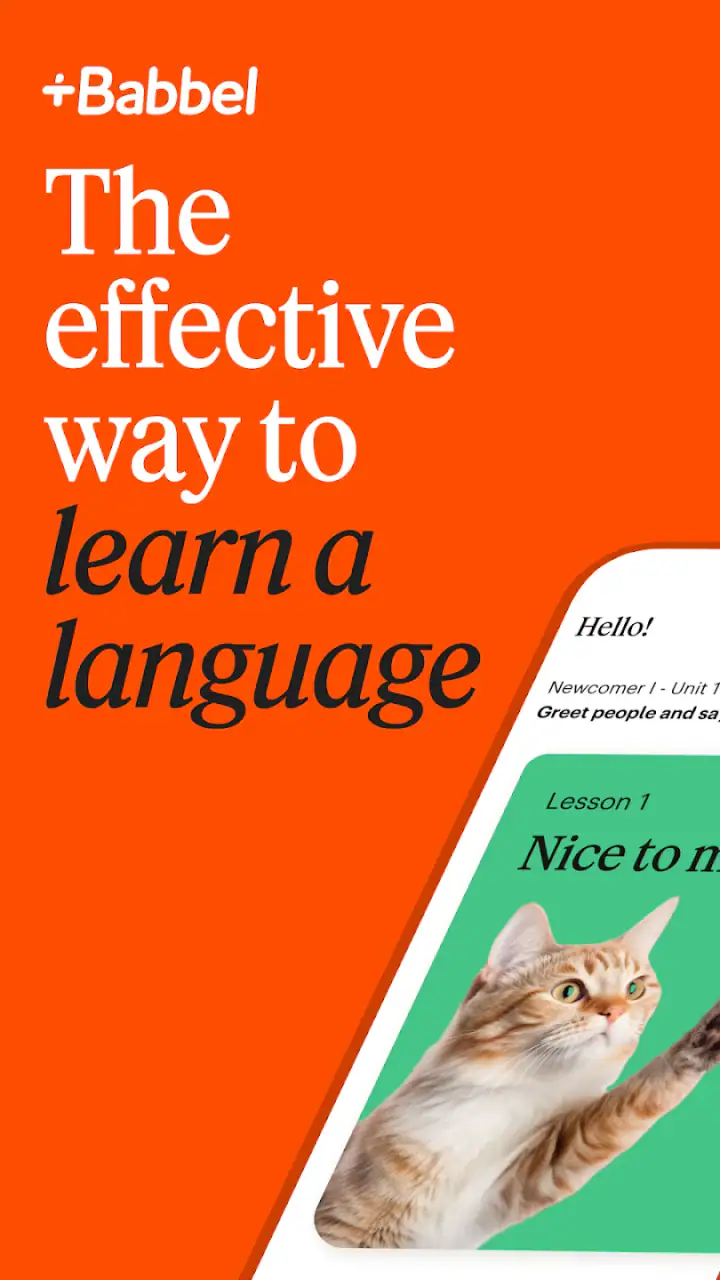
The free starting point is useful for judging whether Babbel’s lesson style suits a learner. I would not pay simply because the app looks polished or because another family member enjoys it. Instead, I would let the intended learner complete enough introductory practice to answer three questions: Do the explanations make sense? Is the pace comfortable? Will this person actually return to the lessons? If the answer to the last question is no, a purchase will not solve the motivation problem.
Babbel’s current version is 21.93.1, and it supports devices running OS 9 or later. In practical terms, that makes compatibility worth checking before planning a shared household setup, particularly if the family keeps an older phone or tablet for children. The app is not something I would install at the last minute before a trip without checking the device first. A short setup test is enough to avoid discovering that the older spare device cannot run it.
Keeping progress and personal goals separate
One of the strongest reasons to use Babbel individually is that its value grows when the learner follows a consistent sequence. I found it more helpful to approach each lesson with a small goal than to jump around looking for isolated words. For example, someone preparing for a holiday can concentrate on introductions, ordering food, directions, and polite requests instead of trying to absorb an entire language at once.
That approach also helps when two people in the same home study different languages. One learner can use short sessions for practical travel phrases, while another can work through a slower routine aimed at long-term familiarity. They do not need to compete or compare progress. In fact, comparing who advances faster can be counterproductive because the difficulty and purpose of each language path may differ.
A useful household habit is to say out loud what the next session should accomplish before closing the app. “Continue the restaurant lesson” is clearer than simply leaving the phone on a screen. This small cue reduces confusion when the device is shared and makes it easier for a learner to resume without repeating material unnecessarily.
I also suggest keeping headphones available if several people study in the same room. Language apps depend on listening as well as reading, and playing audio through a shared speaker can become distracting. Headphones make the session more private and reduce the temptation for another person to answer exercises on the learner’s behalf. That matters because recognition is not the same as recall: hearing someone else solve a prompt does not build the same skill as producing the answer yourself.
Where the lesson design helps in everyday life
Babbel works best for me in small, repeatable blocks. I would use it during a quiet coffee break, on a train, or while waiting for an appointment, provided I could give the lesson enough attention. The guided format is more useful in those moments than opening a dictionary and wondering what to study next. It gives the session a beginning and an end, which lowers the effort needed to get started.
One realistic household scenario would be a couple preparing for a trip. One person has more free time and studies several times during the week; the other has only a few minutes in the evening. They can coordinate by choosing related topics, then practice a few phrases together at dinner. The app supplies the individual structure, while the household conversation supplies a reason to remember the material. I like this combination because it turns study into something connected to a real plan rather than an abstract daily task.
Another useful case is a parent who wants to encourage a teenager without turning every lesson into homework. I would let the teenager choose the target language and set a modest routine, then ask about practical phrases rather than checking every completed exercise. Babbel is more likely to remain useful when the learner feels ownership. Constant supervision can make even a well-designed lesson feel like a chore.
The app also suits adults who prefer explicit instruction. Compared with a general translation app, it offers a learning path instead of merely converting one sentence into another language. Compared with a purely game-like language app, it feels more focused on deliberate practice. That can be an advantage for someone who wants to understand why a phrase is used, not just collect points for opening the app.
At the same time, I would not mistake a lesson-based app for a complete substitute for conversation. Babbel can help build vocabulary, sentence familiarity, and confidence with common situations, but a learner still needs real listening and speaking opportunities to become comfortable with unpredictable replies. If your main goal is live conversation from the beginning, a tutor, conversation exchange, or speaking-focused service may be a better companion.
Age, trust, and sensible supervision
The Everyone rating makes Babbel approachable for a broad household audience, but an age label is not the same as a learning recommendation. A younger child may be able to open the app, yet still need help choosing a realistic language goal, understanding lesson instructions, and deciding whether any paid access is appropriate. I would supervise the first setup without hovering over every exercise.
For older children and teenagers, the main issue is trust. I would explain that progress belongs to the learner and that another family member should not reset, skip, or answer lessons just to explore the app. This is a simple boundary, but it protects the meaning of the progress record. If several people want to experiment, each should do so during an agreed session rather than treating another person’s course as a demo.
Adults should also be clear about account boundaries. A shared device does not automatically mean that every person should use the same account. If one person is studying seriously and another is only trying a few lessons, mixing them can make the experience harder to interpret. The household should decide whether the app is being used by one primary learner or by distinct learners with their own access arrangements.
I appreciate that Babbel is easy to understand at a basic level, but its polished presentation can create unrealistic expectations. A friendly interface does not make language learning effortless. Someone who expects instant fluency may become disappointed, especially if they use the app irregularly. My advice is to judge it by whether it helps you return to meaningful practice, not by whether one short session makes you feel fluent.
Trust also applies to purchases. Since the app is free to install but offers paid items, I would keep the payment decision with the adult who manages the store account. The learner can evaluate the lessons, but the person paying should choose whether the ongoing value justifies the cost. This is particularly important on a family tablet that children use for several unrelated apps.
Limitations I noticed before recommending it
Babbel’s structured approach can feel restrictive if you already know exactly what you want to say. A traveler who needs one unusual phrase immediately may find a translation tool faster. A learner who enjoys wandering through topics may prefer a searchable reference or a more open course platform. Babbel is strongest when you accept its progression and let the lessons organize your practice.
It also requires a degree of consistency that shared devices can undermine. If people keep interrupting one another’s sessions, the app may appear less effective than it really is. The problem is not necessarily the lesson content; it is the lack of a stable learner identity. For a household with one phone and several casual users, a notebook or shared phrase list may be easier for quick group reference, while Babbel remains better for private study.
The price range of the in-app purchases is another reason to evaluate the experience carefully. I would use the free installation as a trial, discuss who will use it, and only then consider spending money. Someone who wants a free, permanently open language reference may not be happy with a learning product that presents paid options. Someone who values a guided course may find the investment more reasonable, but that decision depends on sustained use rather than the first impression.
There is also a motivational trade-off. A game-like app can be more immediately entertaining, especially for a child who needs frequent rewards to stay involved. Babbel’s appeal is different: it is better for a learner who appreciates clear instruction and practical progress. I would choose it for a serious beginner or a returning learner, not for someone who dislikes lessons and only wants a five-second daily distraction.
Who should use it and who should choose something else
I would recommend Babbel to an adult beginner, a student with a specific language goal, or a traveler who wants more preparation than a phrasebook provides. It is also a good fit for a household where each person can protect a separate study routine and where the adult responsible for purchases is involved in the setup.
I would be more cautious for very young learners who need a strongly play-based experience, for advanced speakers seeking specialized professional vocabulary, and for families expecting one shared profile to serve everyone cleanly. In those cases, a child-focused educational product, a tutor, or a dedicated reference tool may be more suitable. The right choice depends on whether the learner needs a guided path, live interaction, or quick access to isolated information.
My practical tip is to connect every lesson to an upcoming situation. Before a trip, practice the phrases you expect to use at a hotel or café. Before meeting relatives who speak another language, focus on greetings and simple questions. After the lesson, say a few phrases aloud without looking at the screen. That final step exposes whether you can actually retrieve the material, rather than merely recognize it during an exercise.
I would also avoid cramming several lessons into one weekend and then abandoning the app. Shorter, repeatable sessions are more realistic for most homes, particularly when a device has to be shared. If the family agrees on a regular time, even an imperfect routine is easier to maintain than a burst of enthusiasm followed by weeks of silence.
My household verdict
After using Babbel with shared-device concerns in mind, I see it as a dependable language-learning app rather than a family entertainment app. Its strength is the guided experience: it gives an individual learner a clear place to begin and practical material to revisit. Its weakness is that the same structure becomes awkward when several people casually take turns without respecting account, progress, and payment boundaries.
The developer, Babbel, has built an app with broad reach and a clear educational purpose. The free installation lowers the barrier to testing it, while the Everyone rating makes it reasonable to consider for a mixed-age household. Still, I would involve an adult in the setup, keep purchase decisions separate from lesson exploration, and make sure each regular learner knows which progress is theirs.
My recommendation is simple: choose Babbel when one learner wants a structured path and the household can protect that learner’s space. Use it alongside real conversation, travel practice, or personal notes, and it becomes more useful than a standalone screen habit. Skip it if you want only instant translations, unrestricted browsing, or a completely shared profile with no coordination. For the right household, it is a practical way to turn spare moments into focused language practice without making the phone the center of family life.
FAQs for Babbel - Learn Languages
What languages can I learn with Babbel?
Babbel offers a wide range of languages for learners, including Spanish, French, German, Italian, Portuguese, Dutch, Swedish, Turkish, and many more. Each language course is tailored to beginners and intermediate learners, with structured lessons designed to improve speaking, listening, reading, and writing skills.
How is Babbel different from other language learning apps?
Babbel focuses on practical conversation skills, using real-life dialogues and interactive exercises. Unlike some other apps, it offers courses designed by linguistic experts with a structured curriculum. Babbel also personalizes learning experiences based on your progress and goals, enhancing retention and practical application.
Is Babbel suitable for complete beginners?
Yes, Babbel is designed for learners at all levels, including complete beginners. The app starts with basic vocabulary and grammar, gradually increasing in complexity. It provides a well-rounded approach to language learning, helping new learners build a solid foundation before moving to more advanced topics.
Can I use Babbel offline?
Babbel provides the flexibility to download lessons for offline use, which is perfect for learning on the go without relying on an internet connection. This feature ensures you can continue your language studies during travel or in areas with limited connectivity, maintaining consistent progress.
What kind of subscription plans does Babbel offer?
Babbel offers several subscription options, including monthly, quarterly, and annual plans. These subscriptions provide full access to all language courses and features. Occasionally, Babbel may offer promotions or discounts, making it more affordable to commit to longer-term language learning goals.
Pros
- Wide range of languages available.
- User-friendly interface for beginners.
- Interactive lessons with real-life scenarios.
- Speech recognition for pronunciation aid.
- Offline access to lessons.
Cons
- Limited free content available.
- Some languages lack advanced levels.
- Subscription can be pricey.
- Occasional app performance issues.
- No live tutor option.


